Real estate videography refers to the process of capturing high-quality video footage to highlight a property’s unique features, layout, design, and surroundings. This type of videography includes various formats such as property tour videos, 360-degree virtual tours, aerial drone footage, and neighborhood lifestyle videos, each offering a unique view of the property.
The benefits of real estate videography include increased engagement, faster sales, and better property presentation. According to the National Association of REALTORS® (NAR), real estate property listings with videos receive 403% more inquiries, highlighting the power of real estate videography in attracting more buyers. Real estate videography helps buyers better understand a property’s layout, scale, and features, while aerial footage and 360-degree tours provide unique perspectives that enhance the buyer’s experience and increase interest.
To become a real estate videographer, you must invest in essential equipment like a camera, a wide-angle lens, a stable tripod, a microphone, lighting gear, and a drone. The cost of real estate videography typically ranges from $200 to $2,500+, depending on video complexity and property size. Gaining skills in videography, editing, and building a portfolio while networking with real estate agents is key to success.
What Are the Different Types of Real Estate Videography?
The main types of real estate videography include property tour and walkthrough videos, 360-degree and VR tours, aerial and drone videos, neighborhood and lifestyle videos, agent introduction videos, and testimonial videos. Each format serves a specific purpose, from providing an interior walkthrough to showcasing the property’s surroundings and building trust with potential buyers through personal introductions and client testimonials.
6 types of real estate videography that attract buyers’ interest are:
Property Tour and Walkthrough Videos
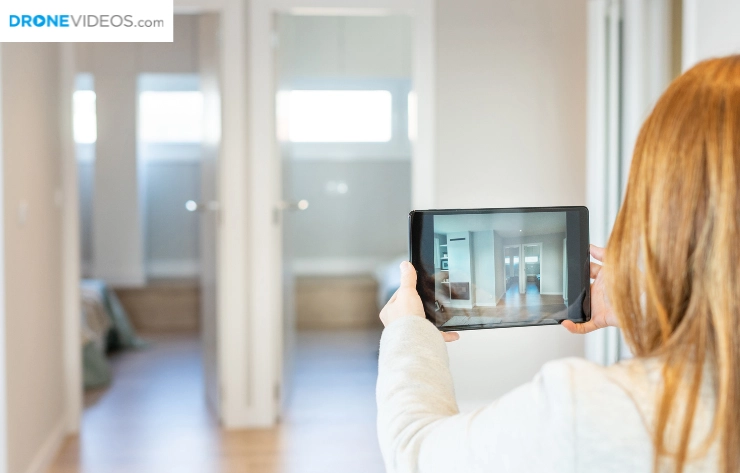
Real estate videography includes property tour and walkthrough videos, which offer an immersive, guided experience of a property, showcasing its layout and key features. These videos typically follow a linear path, taking viewers from the entrance through the main rooms, allowing them to explore the property’s flow and spatial arrangement. Property tour videos are highly engaging, with Redfin reporting a 563% increase in monthly views of 3D walkthroughs in 2020. This format is particularly valuable for remote buyers, as it provides an interactive way to explore the property and get a realistic sense of its size, layout, and features without an in-person visit.
360 Degree or Virtual Reality Tour
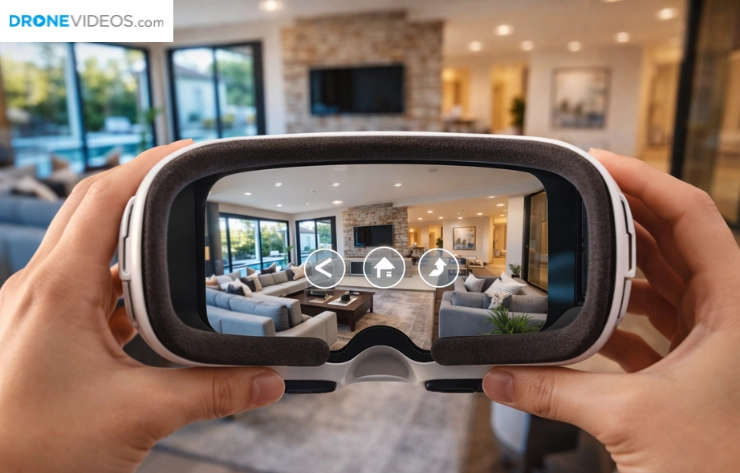
Interactive 360-degree and virtual reality (VR) tours allow potential buyers to explore a property from every angle, providing an immersive experience that traditional videos cannot. Viewers can navigate through rooms, control the perspective, and move freely within the space, offering a more engaging and personalized way to experience a property remotely. Reports from WifiTalent indicate that AI-powered virtual tours increase buyer engagement by 60%, underscoring their effectiveness in modern real estate marketing. This format is particularly beneficial for remote buyers, helping them visualize the property’s layout, size, and details without the need for a real location visit.
Aerial and Drone Videos
Aerial drone footage offers a dynamic, elevated view of properties, capturing both the home and its surrounding environment. According to the National Association of Realtors, listings with aerial/drone video footage sell 68% faster, highlighting the effectiveness of this format in speeding up sales. Drone videos are particularly valuable for showcasing large estates, outdoor features, and the neighborhood context, offering a more comprehensive view of the property. Aerial footage also helps buyers better understand the property’s proximity to key amenities like schools, parks, and transportation hubs. These sweeping shots not only enhance the property’s visual appeal but also provide important context to help buyers make more informed decisions.
Neighborhood and Lifestyle Videos
Focusing on the community surrounding a property, neighborhood, and lifestyle videos highlight key local amenities such as parks, restaurants, schools, shopping centers, and recreational areas. These videos offer potential buyers a sense of the lifestyle the location provides, showcasing not only the property’s surroundings but also the overall vibe of the area. By emphasizing the neighborhood’s atmosphere and the lifestyle it offers, these videos help buyers imagine themselves living in the area, not just within the property itself. This format is especially useful in desirable areas, as it connects the property to its community, making it easier for buyers to envision their daily life in the location.
Agent Introduction and Personal Brand Videos
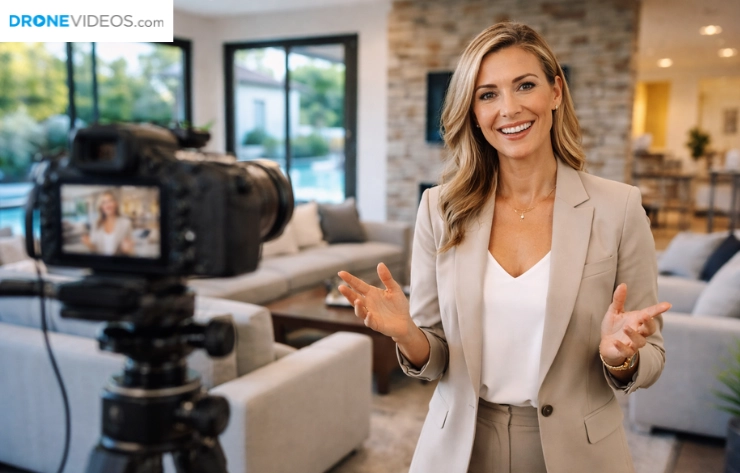
Real estate videography includes agent introductions and personal brand videos, which help realtors establish trust and build a personal connection with potential buyers and sellers. These videos provide a platform for agents to showcase their personality, approach to real estate, and market expertise, helping them stand out in a competitive industry. By emphasizing their local knowledge and sharing success stories and client testimonials, agents can effectively establish their credibility. This personal touch not only helps agents build a strong personal brand but also positions them as trusted professionals, leading to more seller leads, appointments, and clients.
Testimonial and Case Study Videos
Testimonial and case study videos are powerful tools in real estate videography, offering authentic client endorsements and demonstrating the agent’s ability to deliver successful outcomes. These videos showcase real clients discussing their experiences, from buying or selling a property to working with the realtor throughout the process. By featuring genuine success stories, these videos provide social proof, reinforcing the real estate agent’s credibility and trustworthiness. Testimonial videos not only highlight a realtor’s expertise but also help build a strong reputation, attracting more seller leads, referrals, and ultimately new clients.
What Are the Benefits of Real Estate Videography?
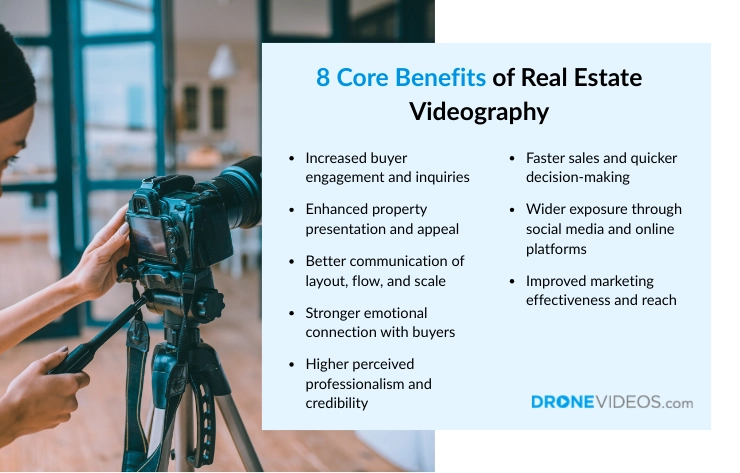
Real estate videography increases buyer engagement, enhances property presentation, and provides a clearer understanding of layout and scale, all of which contribute to faster sales and higher inquiry rates. By showcasing properties in dynamic and engaging ways, video enhances clarity and emotional impact, helping buyers connect with the space on a deeper level. Whether in residential or commercial real estate videography, this format offers a more comprehensive and appealing representation of the property compared to traditional static images. These factors combine to create a more effective marketing strategy that reaches a broader audience.
8 core benefits of real estate videography are:
- Increases buyer engagement and inquiries
- Enhances property presentation and appeal
- Communicates layout, flow, and scale more effectively
- Creates a stronger emotional connection with buyers
- Enhances perceived professionalism and credibility
- Drives faster sales and quicker decision-making
- Expands exposure through social media and online platforms
- Improves marketing effectiveness and reach
How Much Does Real Estate Video Cost?
The cost of real estate videography typically ranges from $200 to $2,500+, depending on the complexity of the video, property size, and the level of expertise required. Basic walkthrough videos generally cost between $200 and $500, while more advanced videos, such as those featuring drone footage or agent-led tours, can range from $800 to $2,500 or more. Additionally, the location of the property also influences the cost of services in larger or more competitive markets, often costing more. When considering real estate videography pricing, it is important to factor in the specific needs of the property, the desired video style, and any additional features that may be included.
What Equipment Do You Need for Real Estate Videography?
Real estate videography requires a camera, a wide-angle lens, a tripod, a stabilizer, an external microphone, lighting gear, and a drone. The camera ensures high-quality visuals, while the wide-angle lens captures more of the space. Tripods and stabilizers keep shots steady, and external microphones ensure clear audio. Lighting gear improves visibility, and drones offer unique aerial perspectives, all of which contribute to creating appealing and immersive real estate videos.
- Camera for Real Estate Videography
A high-quality camera is essential in real estate videography, capturing clear, detailed footage of the property. Cameras with high resolution, high dynamic range (HDR), and low-light performance are key for showcasing both interior and exterior features in optimal lighting. A full-frame camera with interchangeable lenses offers flexibility, allowing for both wide-angle shots and detailed close-ups, ensuring the property is presented in the best possible way.
- Wide-Angle Lens for Real Estate Videography
A wide-angle lens is crucial in real estate videography, allowing for broader coverage of interior spaces and showcasing room layouts more effectively. A 16mm to 35mm lens range is commonly used to capture expansive living areas and kitchens, especially in smaller rooms. This lens helps avoid distortion, providing a more accurate and professional representation of the property’s size and flow, making the space appear larger and more open to potential buyers.
- Tripod for Real Estate Videography
In real estate videography, a tripod is essential for capturing steady, stable shots, especially when capturing wide-angle views of interiors and exteriors. Tripods with adjustable height and fluid pan-and-tilt heads allow real estate videographers to seamlessly capture different angles and smooth camera movements, offering flexibility when shooting. A sturdy tripod with quick-release plates ensures fast setup and reliability, eliminating unwanted camera shake and resulting in more polished, high-quality real estate videos.
- Stabilizer for Real Estate Videography
A stabilizer is crucial in real estate videography for capturing smooth, fluid shots, especially during walkthroughs or while moving through rooms. It helps eliminate shaky footage, allowing the real estate videographer to move through spaces without disrupting the viewing experience. Stabilizers like gimbals are particularly useful for capturing smooth footage while walking through hallways or stairs, providing a more cinematic feel. By maintaining stability, a stabilizer ensures professional-looking footage that highlights the property’s features without distracting movement.
- External Microphone for Real Estate Videography
For high-quality audio in real estate videography, an external microphone is a must-have. Built-in camera mics often pick up unwanted background noise, whereas an external mic delivers clear, focused sound for agent narration or testimonials. Lavalier microphones are perfect for agent-led tours, while shotgun microphones capture crisp audio from a distance. Quality audio ensures a professional experience, making the real estate video more engaging and allowing viewers to clearly hear important details about the property.
- Lighting Gear for Real Estate Videography
Lighting gear is essential in real estate videography to highlight a property’s features and create a professional look. LED panels and softboxes provide even, diffused light, reducing harsh shadows and enhancing the property’s interior design. Ring lights can brighten smaller spaces, while portable lighting kits offer flexibility to adjust for different room sizes or lighting conditions. Proper lighting ensures the property appears well-lit and inviting, helping potential buyers focus on key features without distraction.
- Drone for Real Estate Videography
A drone is a key tool in real estate videography, capturing stunning aerial footage that provides unique views of both residential and commercial properties. Drones offer wide overhead shots, showcasing the property’s landscaping, lot size, and surrounding environment. This perspective is especially useful for properties with large outdoor features, such as gardens or swimming pools. Drones also highlight the neighborhood, including nearby parks, schools, and transportation routes, adding value by showing the property’s location and its connection to important amenities.
What Are the Best Real Estate Videography Tips?
To create compelling real estate videos, focus on smooth camera movement, optimal lighting, clear audio, and highlighting the property’s best features. A well-crafted video should provide an immersive experience that showcases the property’s layout, spatial flow, and unique details, engaging potential buyers and giving them a clear sense of the space.
8 crucial tips for creating an attractive real estate video that helps with faster sales are:
- Plan the shot list before filming to highlight key features.
- Use a tripod or stabilizer for steady footage.
- Utilize natural light and add extra lighting for darker rooms.
- Keep transitions smooth to maintain visual flow.
- Focus on key selling points like spacious rooms and unique features.
- Ensure clear, crisp audio with an external microphone.
- Use drone footage for unique aerial shots of large properties.
- Edit the video tightly to avoid unnecessary footage and maintain viewer interest.
How to Become a Real Estate Videographer?
To become a real estate videographer, develop a strong foundation in videography skills, equipment knowledge, and video editing, while also understanding the real estate market and its unique needs. Learn the basics of camera operation and lighting, and invest in must-have real estate equipment like a camera, tripod, and microphone. Build a portfolio through practice and connect with real estate agents to gain clients. Keep learning and stay updated with industry trends to grow in this field.
7 steps to becoming a real estate videographer are:
- Learn the basics of videography and camera settings.
- Invest in the right equipment, such as a good camera, tripod, and lighting gear.
- Master video editing software to enhance footage and create professional edits.
- Build a portfolio by offering services to local real estate agents or listings.
- Stay updated with trends and best practices in real estate videography.
- Network with real estate professionals to gain clients and referrals.
- Consider certifications or courses in videography or drone operation for added credibility.
Training and Certifications Required for Real Estate Videographer
To become a successful real estate videographer, formal training and certifications can help enhance your skills and boost credibility. While a degree is not always necessary, courses in video production or real estate marketing are valuable.
6 recommended training and certifications for a real estate videographer are:
- Online video production courses:
Udemy courses like “Real Estate Photography and Videography” or LinkedIn Learning’s “Video Production for Beginners”
- Certification in drone operation:
FAA Part 107 for commercial drone use, DJI Drone Training for hands-on experience
- Editing software certifications:
Adobe Premiere Pro certification, Final Cut Pro X online courses from Apple or Skillshare
- Real estate marketing workshops or seminars:
National Association of Realtors video marketing courses, Real Estate Videography Masterclass
- Photography and lighting workshops:
The Great Courses (TGC) on real estate lighting, KelbyOne courses on photography for real estate
- Basic cinematography courses:
MasterClass with Martin Scorsese or Film Riot’s cinematography workshops on YouTube