Real estate drone photography is the practice of using drones equipped with cameras to capture aerial images and videos of properties. This technique offers unique perspectives, showcasing both the property and its surrounding area. Drones are especially useful for capturing frontal, overhead, and orbiting shots, providing potential buyers with a clear view of the property’s layout, size, and surrounding landscape, particularly for large homes or acreage.
To get started in real estate drone photography, you need to obtain the proper certifications, such as the FAA Part 107 certification in the U.S., and develop skills in both flying and photography. Choosing the right drone is crucial, with options like the DJI Mini 3 Pro or Mavic Air 2S offering 4K resolution and stable flight controls, ideal for capturing high-quality images of residential and commercial properties.
For successful real estate drone photography, optimize your camera settings for clarity, shoot during the golden hours for the best light, and use the RAW format for greater flexibility in editing. Drones allow you to capture wide, dynamic views, making them an essential tool for marketing properties.
What Is the Cost of Drone Real Estate Photography?
The cost of drone real estate photography ranges from $150 to $750+, depending on the pricing model, property size, location, and the services required. Basic photo packages start at $150-$250, while premium packages that include video footage can range from $500 to $750 or higher. Additionally, drone real estate photography cost is also influenced by hourly rates, $75 to $300+ per hour, depending on the photographer’s experience and project complexity. For properties priced by square footage, costs range from $0.20 to $2.00 per square foot, with smaller properties at the lower end and larger, more complex properties at the higher end.
How to Get Started in Real Estate Drone Photography?
Getting started in real estate drone photography involves acquiring the right drone, obtaining necessary FAA Part 107 certifications, and learning drone operation and photography skills. A good drone for real estate should have a high-resolution camera, stable flight control, and long battery life for capturing detailed aerial shots. Additionally, practicing basic photography techniques and understanding legal requirements like permissions and insurance will help ensure success in the field.
Here is a quick overview to get started in real estate drone photography:
- Choose the Right Drone:
Select a drone with a high-resolution camera, stable flight control, and long battery life. Popular options for real estate photography include the DJI Mini 3 Pro or Mavic Air 2S, both offering 4K resolution and reliable flight performance. Look for features like GPS navigation, obstacle avoidance sensors, and at least 20 minutes of flight time to capture multiple angles of a property. - Obtain Certifications:
To legally operate drones for commercial use, you need to obtain an FAA Part 107 certification (in the U.S.). This involves passing a written test on topics such as airspace regulations, weather, and drone safety. Other regions may have similar requirements, so it is important to check local regulations. - Learn Drone Operation:
Master the basic functions of your drone, including takeoff, landing, and maneuvering. It is essential to practice in various weather conditions and familiarize yourself with the drone’s controls to ensure smooth and safe flights, especially in real estate settings. - Master Photography Skills:
Understand essential photography techniques, such as adjusting your camera settings (shutter speed, ISO, and aperture) to capture clear and bright images. Learn about framing and composition to highlight property features, and experiment with flight heights and angles for the best shots. - Build Your Portfolio:
Start by capturing high-quality sample images of different properties, even if it means offering free or discounted services initially. Create a professional portfolio showcasing your best work, then reach out to real estate agents, property sellers, or agencies to offer your services and grow your client base.
How to Choose the Right Drone for Real Estate Photography?
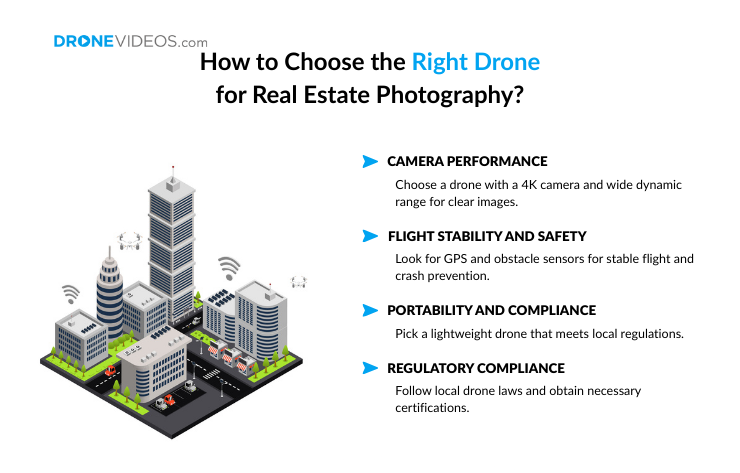
When choosing the right drone for real estate photography, prioritize camera performance, flight stability, portability, and regulatory compliance. A high-quality camera ensures clear images, while stability helps capture smooth shots. Portability makes transportation easier, and regulatory compliance ensures you operate legally and avoid potential fines.
Consider these 4 aspects while selecting a drone for real estate photography:
- Camera Performance
A high-quality camera is essential for capturing crisp, detailed images of properties. Look for drones with at least a 4K camera to ensure the photos and videos are sharp and clear. Additionally, consider a drone with a large sensor and wide dynamic range to better handle lighting variations, especially during dawn or dusk shoots.
- Flight Stability and Safety
Stability is critical in drone photography, especially when capturing detailed shots of properties. Drones with GPS-based flight systems, such as the DJI Mini 3 Pro or Mavic Air 2S, offer precise control and can maintain stable flight even in windy conditions. Also, ensure the drone has obstacle avoidance sensors to prevent crashes when flying close to buildings or trees.
- Portability and Compliance
Portability is important for ease of transport, especially if you are shooting multiple properties in a day. Lightweight drones like the DJI Mini 3 Pro are easy to carry without compromising on performance. Additionally, ensure the drone complies with local regulations, such as weight limits or drone registration requirements, to avoid legal issues during your shoots.
- Regulatory Compliance
Before operating a drone for real estate photography, make sure you understand the regulatory requirements in your region. In the U.S., for example, commercial drone operators must hold an FAA Part 107 certification. Many other countries have similar regulations, so it’s important to be aware of the rules and obtain the necessary licenses or permissions before taking flight.
What Are the Best Tips for Real Estate Drone Photography?
To achieve stunning real estate drone photos, focus on setting up the landscape, optimizing camera settings, flying low, highlighting the home’s best features, using natural light, and shooting in RAW. These techniques will ensure your photos are sharp, professional, and visually engaging, showcasing the property at its best while attracting potential buyers with high-quality images that emphasize key selling points.
- Set Up the Listing Landscape
Before shooting, ensure the property is meticulously prepared by removing any clutter, tidying the yard, and addressing any distractions that could detract from the property’s appeal. A well-maintained exterior creates a more polished and inviting visual for potential buyers, making the property stand out in listing photos. - Optimize Camera Settings
Adjust your camera settings to suit the lighting conditions. Use a low ISO (100-400) to avoid grainy images, and adjust the shutter speed to capture clear, crisp photos. Set the aperture to around f/5.6 to maintain focus across the entire frame, ensuring that both the property and its surroundings are sharp. - Fly Your Drone Low
Flying low and at an optimal angle can help emphasize the property’s features, such as the front yard, garden, or architectural details. Low shots, around 10 to 20 feet off the ground, create a more dynamic and engaging perspective that highlights the home’s best features. - Highlight the Home’s Best Features
Focus on the unique aspects of the property, such as a spacious backyard, pool, or distinctive architecture. Capture these features from various angles to give potential buyers a comprehensive view of the property’s layout and design. - Use Natural Light
Aim to shoot during the golden hours, early morning or late afternoon, when the natural light is softer and more flattering. These times, typically from 6 a.m. to 9 a.m. or 5 p.m. to 7 p.m., offer a warm, golden glow that enhances the visual appeal of the property and reduces harsh shadows. - Shoot in RAW and Edit Later
Shooting in RAW format allows you to retain more image detail, giving you greater flexibility when editing. This is especially helpful for correcting lighting, exposure, and color balance in post-production, ensuring the photos look their best.
How to Build a Career in Real Estate Drone Photography?
To build a real estate drone photography career, acquire the right training, obtain certifications (FAA Part 107), invest in quality photography equipment, develop networking skills, and create a strong portfolio. Start by getting certified, such as with the FAA Part 107, and invest in a reliable drone like the DJI Mini 3 Pro. Then, network with real estate agents and market your services to build a steady client base.
Here is a step-by-step guide to get started with your real estate drone photography career:
- Get Proper Training and Certifications: Obtain necessary certifications like the FAA Part 107 in the U.S. to legally operate drones commercially. Consider drone photography courses to enhance your flying and photography skills.
- Invest in Quality Equipment: Choose a reliable drone with a high-quality camera, such as the DJI Mini 3 Pro or Mavic Air 2S, to produce professional-grade photos and videos.
- Build a Strong Portfolio: Start by offering discounted services to create a portfolio of your best work, showcasing your skills with high-quality real estate drone images of various properties.
- Network with Real Estate Agents: Reach out to real estate agents and brokers to offer your services, emphasizing the value of aerial shots in showcasing properties.
- Market Your Services: Use social media, a personal website, and real estate platforms to promote your drone photography services. Share your work, engage with potential clients, and build a professional online presence to attract business.
- Keep Learning and Growing: Stay updated on drone technology, attend workshops, and continuously improve your skills to remain competitive in the industry.
What Training and Certifications Are Required for Real Estate Drone Photographers?
To work as a real estate drone photographer, you need to obtain the FAA Part 107 certification, pass an aeronautical knowledge test, and potentially complete additional local training. Here is what you need:
- FAA Part 107 Certification:
In the U.S., you must be at least 16 years old to obtain the FAA Part 107 certification. This requires passing an aeronautical knowledge test covering topics like airspace regulations, weather patterns, and operational rules. The test consists of 60 questions, and you must score at least 70% to pass.
- Drone Pilot Training:
Although not mandatory, taking specialized drone pilot training can help improve your flying skills and understanding of drone operation in real estate settings. These courses cover essential topics like camera settings, aerial photography techniques, flight maneuvers, risk management, and best practices for aerial photography.
- Local and Regional Certifications:
In addition to the FAA Part 107, some regions have specific local regulations. For example, in New York City, you need an NYPD Unmanned Aircraft Permit with a $150 non-refundable application fee for commercial drone flights. In California, you must hold an FAA Part 107 Remote Pilot Certificate to operate drones commercially, and some areas may require additional permits for flights near public spaces.
- Ongoing Education:
Since drone laws and technologies are constantly evolving, staying current is important. Participating in ongoing education, such as attending workshops, webinars, or online courses, can help you stay updated on new rules, regulations, and best practices, ensuring you remain a competitive and compliant drone photographer.
How Much Do Real Estate Drone Photographers Make?
Real estate drone photographers typically earn an average of $62,338 per year or $5,194 per month. According to ZipRecruiter, earnings can range from $1,198 per week to $29.97 per hour, depending on experience, location, and the type of services provided. More experienced photographers offering services like aerial video footage, virtual tours, or 3D mapping can charge up to $1,000 or more per project. Additionally, hourly rates for real estate drone photographers can vary from $75 to $300 per hour, with seasoned professionals in high-demand areas earning at the upper end of that range.
How Drones Are Used in Residential and Commercial Real Estate Photography?
Drones are used in residential and commercial real estate photography by capturing high-quality aerial images and videos that provide unique perspectives of properties, helping buyers and sellers see the property in its full context.
In residential real estate, drones highlight the property, yard, and surrounding area, helping buyers better understand its size, layout, and proximity to nearby amenities. In commercial real estate photography, drones are essential for showcasing large properties such as office buildings and industrial sites, offering wide-angle views that emphasize the scale and location. Additionally, drones are used to create aerial videos and virtual tours, providing an immersive experience for both residential and commercial property marketing.