
Must-have real estate photography equipment are camera, lens, tripod, lighting gear, and storage solutions. These essential equipment form the foundation of professional real estate photography, ensuring every image is sharp, evenly lit, and compositionally accurate.
Beyond these core tools, accessories like remote releases, spirit levels, and cleaning kits help real estate photographers maintain control, accuracy, and equipment longevity. Advanced options, such as 360-degree cameras and drones, further enhance creativity by capturing immersive indoor views and striking aerial perspectives.
Ultimately, the right combination of equipment defines how a real estate property is portrayed, allowing photographers to capture images that are precise, balanced, and visually engaging.
14 essential equipment for real estate photography:
- Camera For Real Estate Photography
- Essential Lens and Filters
- Tripod and Heads For Stable and Clear Shots
- Lighting Gears For Perfect Lit Photos
- Storage Solutions
- Remote Release For Shake-Free Photography
- Spirit Level for Perfectly Aligned Shots
- Backup Power
- Cleaning Kit & Protective Gear
- 360 Camera For Detailed Views
- Drone For Stunning and Aerial Photography
- Photo-Editing Software
- Editing Device
- Backpacks For Gear
Camera For Real Estate Photography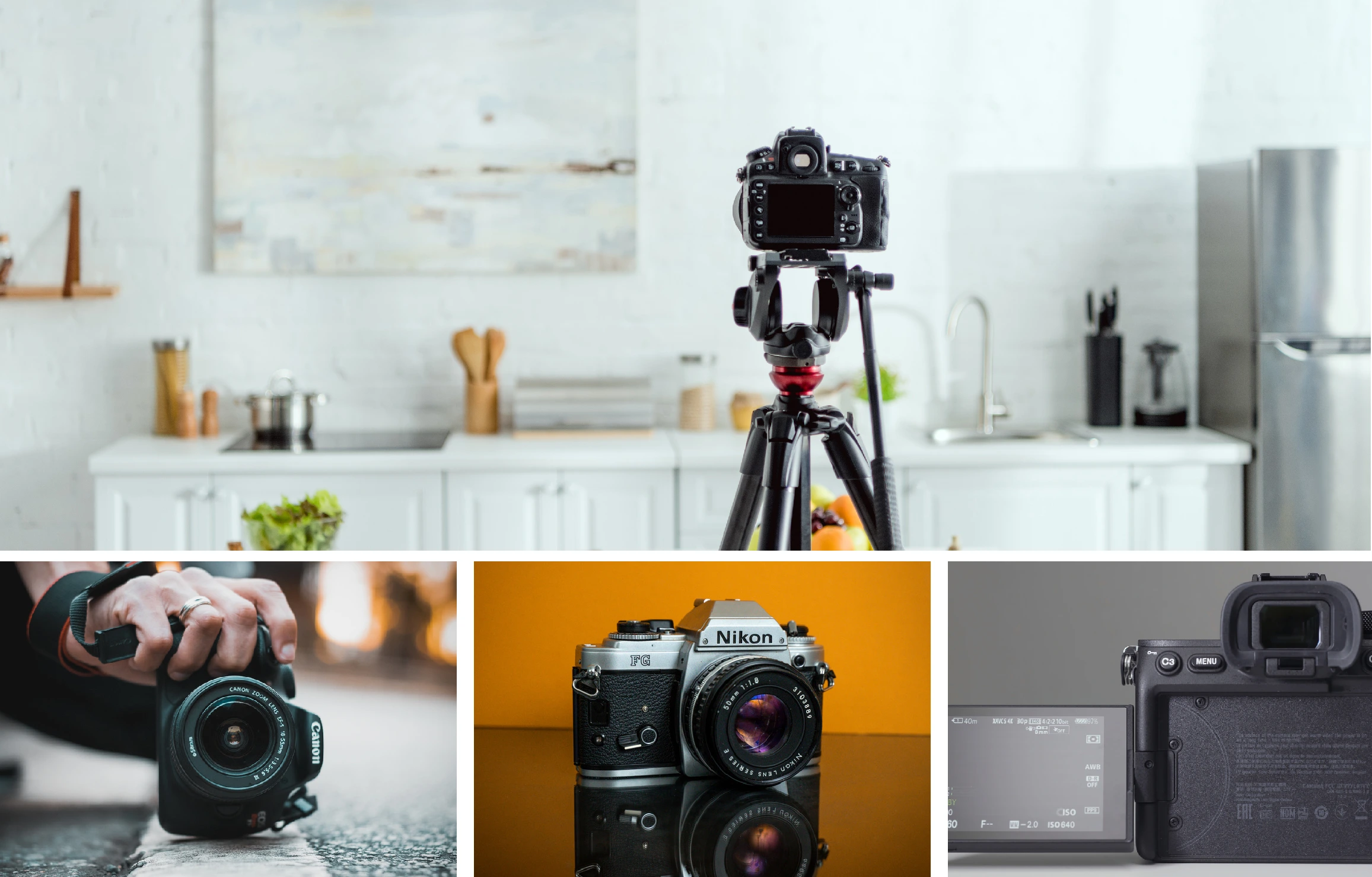
Real estate photography requires a professional-grade camera that delivers high resolution, accurate exposure, and consistent color balance across different lighting conditions. The camera is the central tool in every shoot, influencing how detail, depth, and texture appear in each image. A large sensor camera, such as a full-frame DSLR or mirrorless model, captures bright highlights and dark shadows in a single frame, creating balanced and realistic property visuals.
When choosing a camera, real estate photographers should consider sensor size, resolution, and manual control options. Full-frame sensors perform better in low light, while mirrorless systems offer fast autofocus and lighter bodies for flexible on-site shooting. Models with built-in HDR and exposure bracketing simplify post-processing and improve workflow efficiency.
Recommended Cameras for Real Estate Photography:
- Canon EOS R6 – 20MP full-frame sensor with superior low-light capability.
- Nikon D850 – 45.7MP DSLR ideal for detailed property interiors.
- Sony A7 IV – 33MP mirrorless camera offering dynamic range and precision autofocus.
Essential Lens and Filters
A high-quality lens shapes how space and depth appear in real estate photography. The right lens helps rooms look open and natural while maintaining accurate proportions. A wide-angle lens is ideal for interiors since it captures more of a room in one frame without visible distortion. For exterior architecture, a tilt-shift lens is highly effective as it corrects perspective and keeps vertical lines straight, ensuring buildings appear true to form.
To enhance image quality further, real estate photographers use filters that refine light and color. A polarizing filter reduces reflections from glass or shiny surfaces, while neutral density (ND) and UV filters control brightness and protect the lens during outdoor shoots. When used together, these accessories ensure consistent exposure, accurate color, and superior clarity across every frame.
Recommended Lenses and Filters for Real Estate Photography:
- Canon RF 15–35mm f/2.8L IS USM – sharp, wide-angle zoom for interiors.
- Nikon PC 19mm f/4E ED Tilt-Shift – perspective control for exteriors.
- B+W Circular Polarizer – minimizes glare and boosts contrast.
Tripod and Heads For Stable and Clear Shots
A sturdy tripod provides the stability needed to capture sharp, well-aligned property images during any shoot. In real estate photography, maintaining stability is vital when working in low light or using slower shutter speeds. A dependable tripod minimizes camera shake, keeps framing consistent, and ensures clear and professionally composed results when producing HDR or bracketed exposures.
Equally important is the tripod head, which determines how smoothly and accurately the camera can be positioned. A ball head allows quick, fluid adjustments for flexible setups, while a geared head offers fine, controlled movements ideal for architectural alignment. Lightweight carbon fiber tripods combine strength with portability, making them practical for interior and exterior shoots.
Recommended Tripods and Heads for Real Estate Photography:
- Manfrotto MT055CXPRO3 Carbon Fiber Tripod – lightweight, durable, and easy to adjust.
- Vanguard Alta Pro 263AB 100 Tripod – excellent flexibility with a multi-angle center column.
- Arca-Swiss D4 Geared Head – precise alignment for architectural photography.
Lighting Gears For Perfect Lit Photos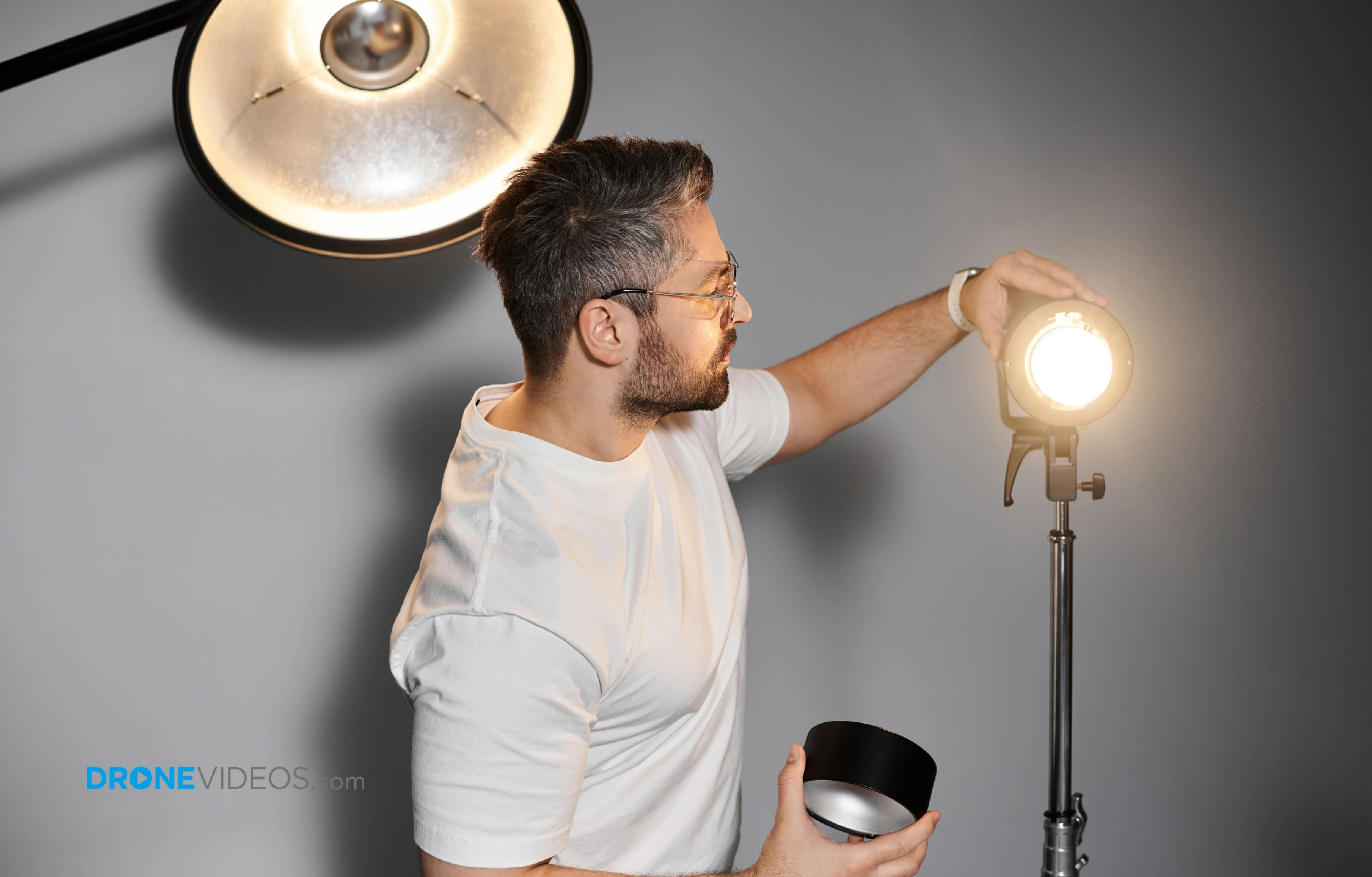
Effective lighting gear transforms real estate photography by revealing texture, color, and depth while ensuring every room appears bright and balanced. Proper lighting highlights architectural details and interior finishes, creating a natural atmosphere that enhances visual appeal. Without it, even well-composed shots can look flat or uneven.
A professional setup usually includes LED panels, softboxes, and flash units. LED lights deliver steady brightness for both indoor and twilight scenes, while softboxes diffuse harsh light to create smooth, even illumination. Flash units with light modifiers help control mixed lighting conditions, reducing shadows and maintaining color accuracy. Together, these tools ensure consistent exposure and realistic tones across all property photos.
Recommended Lighting Gear for Real Estate Photography:
- Godox SL60W LED Video Light – consistent brightness and natural color.
- NEEWER 2 Pack Bi Color 660 LED Video Light – adjustable dual-panel lighting for versatile setups.
- Profoto D1 500 Air – professional studio flash delivering powerful and balanced output.
- Yongnuo YN560 IV Speedlight – compact flash for portable lighting control.
Storage Solutions
Real estate photography requires reliable storage solutions to handle large image files, protect data, and keep the workflow organized. Each project generates dozens of RAW and edited files, so dependable storage is essential for managing and backing up work efficiently. Without it, real estate photographers risk losing images or slowing post-processing.
Professionals often combine high-speed SD cards, external drives, and cloud storage for complete protection. Fast SD cards allow smooth on-site shooting, while portable SSDs enable quick transfers and edits. Cloud platforms such as Dropbox, Google Drive, and OneDrive provide secure off-site backups and easy file sharing with clients or editors, ensuring accessibility and collaboration from any location.
Recommended Storage Solutions for Real Estate Photography:
- SanDisk Extreme Pro SDXC 128GB – fast and dependable for continuous capture.
- Samsung T7 Portable SSD 1TB – compact, durable, and high-speed.
- Western Digital My Passport 4TB – secure, long-term backup drive.
- Dropbox Professional – reliable cloud storage for seamless access.
Remote Release For Shake-Free Photography
In real estate photography, a remote release is an essential tool for capturing sharp, shake-free images during long exposures or HDR sequences. Because property interiors often require slow shutter speeds to balance indoor and outdoor light, even slight camera movement can blur important details. A remote release prevents this by allowing photographers to trigger the shutter without touching the camera, maintaining full stability throughout the exposure and preserving fine architectural detail.
Available in wired, wireless, and Bluetooth versions, remote releases offer flexibility during tripod-based shoots. Wireless options are ideal for real estate photographers who need mobility while maintaining stable framing. When paired with a sturdy tripod, they improve workflow efficiency and image consistency across multiple rooms.
Recommended Camera Remote for Real Estate Photography:
- Canon BR-E1 Wireless Remote – compact and simple to pair.
- Vello FreeWave Plus Wireless Remote – dependable range and fast response.
- Pixel TW-283 Wireless Shutter Release – supports timed and interval shooting.
Spirit Level for Perfectly Aligned Shots
A precise spirit level helps real estate photographers keep every shot straight and properly aligned, ensuring images look natural and professional. Even a slight tilt can distort room proportions and make interiors appear uneven. Using a spirit level keeps both horizontal and vertical lines accurate, producing balanced compositions that reflect a property’s true structure.
Spirit levels are available as built-in, hot-shoe, or handheld tools. Built-in and hot-shoe levels offer quick setup alignment, while compact handheld versions are useful when shooting on uneven flooring. Incorporating a spirit level into each session helps maintain consistency across rooms and supports a clean, professional finish.
Recommended Spirit Levels for Real Estate Photography:
- Manfrotto Hot Shoe Double Axis Bubble Level – quick and lightweight for travel setups.
- FOTYRIG Camera Level Hot Shoe Level 3 Axis Bubble Spirit – provides precise three-axis balance.
- Linhof Dual Spirit Level – professional-grade tool for maximum accuracy.
Backup Power
During long property shoots or outdoor sessions, maintaining power is a constant challenge in real estate photography. Cameras, lighting setups, and drones drain batteries quickly, and an unexpected shutdown can interrupt workflow or cause missed shots. Reliable backup power keeps every device running smoothly, allowing photographers to complete sessions efficiently without interruptions.
Most professionals carry extra batteries, portable power banks, and dual-slot chargers to stay prepared for long hours on-site. High-capacity power banks allow quick recharging between sessions, while compact chargers are ideal for travel. Smart charging systems also prevent overheating and extend battery life.
Recommended Backup Power Options for Real Estate Photography:
- Anker PowerCore 26800 Portable Charger – high capacity for extended sessions.
- Nitecore UCN2 Dual Slot Charger – efficient and fast recharging.
- RavPower 20000mAh Power Bank – lightweight, travel-friendly backup.
- Wasabi Power Camera Batteries – reliable, long-lasting replacements.
Cleaning Kit & Protective Gear
Real estate photography requires a cleaning kit and protective gear to maintain equipment performance and ensure consistent image quality. Lenses and sensors easily collect dust, moisture, or fingerprints during shoots, especially when moving between interior and exterior spaces. Regular maintenance prevents these particles from affecting clarity or damaging sensitive components, keeping gear reliable throughout every session.
Lens cleaning tools such as microfiber cloths, air blowers, and lens wipes safely remove dust and smudges without scratching surfaces. Weatherproof cases, lens caps, and rain covers protect cameras from moisture and environmental exposure. By following these best practices, photographers preserve the longevity and precision of their equipment.
Recommended Cleaning and Protective Tools for Real Estate Photography:
- Giottos AA1900 Rocket Air Blower – removes dust from lenses and sensors.
- Zeiss Lens Cleaning Wipes – quick, streak-free cleaning.
- Think Tank Photo Hydrophobia V3.0 Rain Cover – shields gear from rain and debris.
- Pelican 1510 Protector Case – durable, weather-sealed equipment case.
360 Camera For Detailed Views
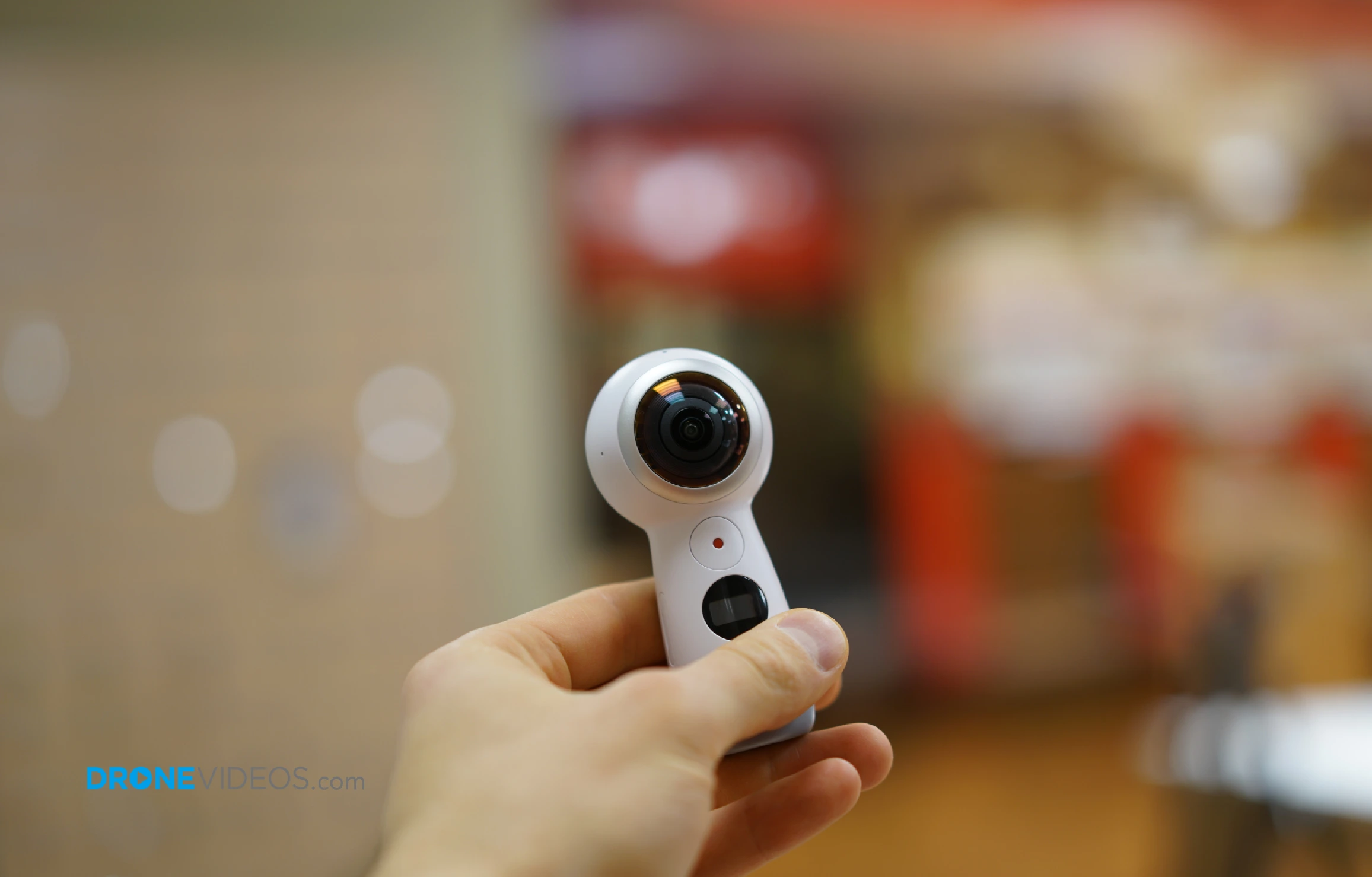
A 360-degree camera enables real estate photographers to capture immersive, panoramic views that showcase an entire property in a single frame. These cameras help potential buyers virtually explore rooms and layouts, giving them a realistic sense of space and design. For agents, 360 imagery adds value to listings by creating more engaging and interactive presentations.
Modern 360 cameras feature high-resolution sensors, dual wide-angle lenses, and automated stitching software that merge multiple images into seamless panoramas. Many models also include HDR modes and stabilization features to enhance clarity and reduce distortion. Compact and easy to operate, they are ideal for capturing both interior rooms and exterior surroundings quickly and efficiently.
Recommended 360 Cameras for Real Estate Photography:
- Ricoh Theta Z1 – professional dual-lens system for detailed virtual tours.
- Insta360 ONE RS 1-Inch Edition – Leica optics for exceptional clarity.
- GoPro Max 360 Camera – portable, durable, and easy for quick setups.
Drone For Stunning and Aerial Photography
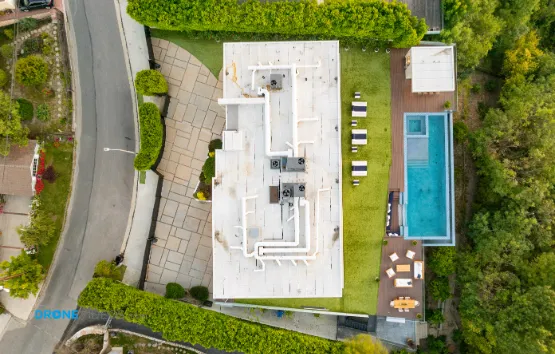
A drone elevates real estate photography by providing aerial perspectives that capture a property’s scale, layout, and surrounding environment. These high-angle shots help potential buyers visualize the home in its true context, showing lot size, landscaping, and neighborhood appeal.
Aerial imaging is valuable across many fields, including commercial real estate photography, construction progress tracking, and insurance assessment, where clear views of roofs, access points, and surrounding structures support better decision-making. By combining visual impact with technical precision, drone imagery adds depth and dimension to property documentation, creating more engaging and reliable visuals.
Modern drones feature high-resolution cameras, three-axis gimbals, and GPS-assisted flight systems for smooth, stabilized footage. Many also offer automated flight modes and obstacle avoidance to ensure consistent and safe operation. With long battery life and real-time video feeds, drones allow photographers to compose shots with precision and efficiency.
Recommended Drones for Real Estate Photography:
- DJI Phantom 4 Pro V2.0 – 20MP 1-inch sensor for professional detail.
- DJI Air 2S – compact and intelligent with HDR video.
- Autel Robotics EVO Lite+ – long battery life and vibrant color capture.
Photo-Editing Software
Real estate photography requires photo-editing software to refine images, correct imperfections, and create a consistent, professional look across every listing. Even with well-captured shots, editing is what enhances brightness, color balance, and composition to produce visually appealing results. Proper editing ensures that interior and exterior photos align in tone, lighting, and detail for cohesive property presentations.
Modern software includes HDR merging, lens correction, and perspective adjustment to fix distortion and balance exposure between bright windows and darker rooms. Cloud-based platforms also simplify collaboration between photographers and editors for faster delivery.
Recommended Photo-Editing Software for Real Estate Photography:
- Adobe Lightroom Classic – powerful batch editing for consistent tone and color.
- Adobe Photoshop – precise retouching and advanced adjustments.
- Luminar Neo – AI-based editing with quick lighting enhancements.
- Capture One Pro – superior color grading for professional workflows.
Editing Device
A powerful editing device in real estate photography helps to handle large image files and ensure precise color accuracy during post-processing. Editing high-resolution photos requires speed, clarity, and display accuracy, making a reliable laptop or desktop an essential part of every photographer’s workflow. A capable device allows seamless multitasking while maintaining image detail across advanced editing software.
When selecting an editing device, photographers should consider processor performance, RAM capacity, and display resolution. A high-resolution, color-calibrated screen ensures accurate tone representation, while ample storage and a fast SSD improve overall efficiency. Portability is also key for on-location editing.
Recommended Editing Devices for Real Estate Photography:
- Apple MacBook Pro 16″ (M5) – fast performance and color-accurate Retina display.
- Dell XPS 15 – 4K OLED screen for precise image rendering.
- Apple iMac 27″ (Retina 5K) – large, high-resolution display for studio editing.
- ASUS ProArt Studiobook 16 – built for color-critical creative work.
Backpacks For Gear
A durable backpack designed for real estate photography keeps gear organized, protected, and easy to access during shoots. Since photographers often move between interiors, exteriors, and aerial setups, portability and protection are vital. A quality backpack shields cameras and lenses from impact, dust, and moisture while keeping equipment ready for quick use.
Key features to consider include compartment design, weight balance, and weather resistance. Adjustable dividers allow flexible setups, and padded straps provide comfort during long shooting days.
Recommended Backpacks for Real Estate Photography:
- Lowepro ProTactic 450 AW II – durable build with flexible storage.
- Peak Design Everyday Backpack 30L – sleek design with fast top access.
- Manfrotto Advanced III Camera Backpack – lightweight and weather-resistant.
- WANDRD PRVKE 31L Backpack – rugged and stylish with quick side access.
Why Investing in Equipment is Essential for Real Estate Photography?
Investing in high-quality equipment is essential in real estate photography because it enhances image clarity, improves workflow efficiency, expands creative potential, and strengthens professional credibility. The right tools, including cameras, lenses, lighting, and accessories, help photographers capture accurate details, balanced lighting, and visually consistent compositions that elevate property presentation and inspire client confidence.
Key Reasons to Invest in Professional Equipment:
- Delivers superior image quality with sharper focus and true color accuracy.
- Boosts workflow efficiency through reliable, high-performance tools.
- Provides durability and stability for long-term professional use.
- Enables creative flexibility in different lighting and space conditions.
- Enhances client trust and brand reputation through consistent results.
How Much Does Real Estate Photography Equipment Cost?
A complete real estate photography setup typically costs between $4,000 and $10,000, depending on the quality, brand, and features of the equipment. This includes essential tools like cameras, lenses, tripods, lighting systems, and editing devices, along with accessories such as drones, 360 cameras, and storage gear. Understanding overall real estate photography cost helps photographers plan budgets effectively and invest in equipment that matches their skill level and business goals.
| Equipment Category | Estimated Cost Range (USD) | Notes |
| Camera (DSLR/Mirrorless) | $1,200 – $3,500 | Core tool for high-resolution images |
| Lenses (Wide-angle, Tilt-shift) | $650 – $2,500 | For accurate spatial representation |
| Tripod & Heads | $100 – $3,000 | Provides stability for clear, aligned shots |
| Lighting Gear | $200 – $2,000 | Includes LED panels, flashes, and softboxes |
| Remote Camera Release | $40 – $100+ | Enables shake-free long exposures |
| Spirit Level | $20 – $200 | Maintains straight and level compositions |
| Storage & Backup Devices | $150 – $1,000+ | SSDs, hard drives, and cloud storage |
| Backup Power | $100 – $300 | Portable chargers and spare batteries |
| Cleaning Kit & Protective Gear | $10 – $250 | Keeps lenses and gear dust-free and secure |
| 360 Camera | $200 – $550+ | For immersive property tours |
| Drone | $400 – $10,000+ | Captures aerial perspectives and exteriors |
| Photo-Editing Software | $50 – $600 | Subscription-based or perpetual license |
| Editing Device (Laptop/Desktop) | $1,000 – $3,000+ | For smooth editing and color accuracy |
| Backpack for Gear | $50 – $400+ | Protects and organizes equipment during travel |
How Should You Maintain Your Photography Equipment?
To maintain photography equipment, real estate photographers should clean, store, and inspect their gear regularly to ensure lasting performance and consistent image quality. Regular care prevents dust buildup, moisture damage, and general wear while keeping cameras, lenses, and accessories dependable for every shoot. Proper maintenance also reduces long-term repair costs and protects overall equipment value.
Essential Maintenance Tips for Real Estate Photography Equipment:
- Use microfiber cloths and air blowers to remove dust and fingerprints.
- Store equipment in dry, temperature-controlled cases to prevent humidity damage.
- Keep lenses capped and cameras covered when not in use.
- Clean optics and sensors with approved cleaning kits only.
- Check batteries, chargers, and cables before each shoot.
- Update firmware and software regularly for optimal performance.
- Schedule professional servicing at least once a year.