
Commercial real estate photography costs between $300 and $1,500 for standard packages, with pricing reaching $2,500 or more for large multi-building campuses, full-day productions, and projects that bundle drone aerials, cinematic video, 3D virtual tours, and twilight sessions. The base rate depends primarily on property type, size, and the scope of services required. A small single-tenant retail unit with basic exterior and interior stills sits at the lower end of the range, while a multi-story office building needing comprehensive interior coverage, aerial photography, a floor plan, and a marketing video represents a full-scale production at the higher end.
Unlike residential photography, commercial real estate (CRE) photography is priced around the marketing purpose of the images, not just the square footage of the space. The same building photographed for a for-sale listing, an investor presentation, and a national leasing campaign can carry three very different price tags because the licensing rights, usage scope, and expected deliverables differ significantly across each scenario. Understanding how these variables stack up is the key to budgeting accurately and selecting the right photographer for your property.
Commercial real estate photography serves brokers, property owners, developers, asset managers, and corporate tenants across office, retail, industrial, multifamily, hospitality, and mixed-use asset classes. Whether you are marketing a vacant warehouse for lease or producing a flagship tenant showcase for a Class A downtown tower, this guide covers what you will pay and what drives the price.
What Is the Average Cost of Commercial Real Estate Photography?
The average cost of commercial real estate photography ranges from $300 to $1,500 per shoot for standard packages. This range accounts for variation in property size, number of images, and whether the package includes only ground photography or also incorporates aerial drone shots. Comprehensive packages that bundle ground photos, drone aerials, cinematic video, a 3D virtual tour, and a floor plan can reach $3,000 to $5,000 or more for larger assets.
For comparison, real estate photography cost for residential properties typically runs $150 to $500 per shoot. Commercial work commands higher rates because the properties are larger, the lighting setups are more complex, licensing terms extend beyond a simple listing period, and brokers expect a broader, more polished deliverable set that supports leasing campaigns, investor presentations, and property websites simultaneously.
What Are the Commercial Real Estate Photography Pricing Models?
Commercial real estate photographers use several pricing models, and the model you negotiate will significantly affect both the final cost and the flexibility of the engagement. Understanding each model before requesting quotes helps ensure you are comparing apples to apples when evaluating proposals from multiple photographers.
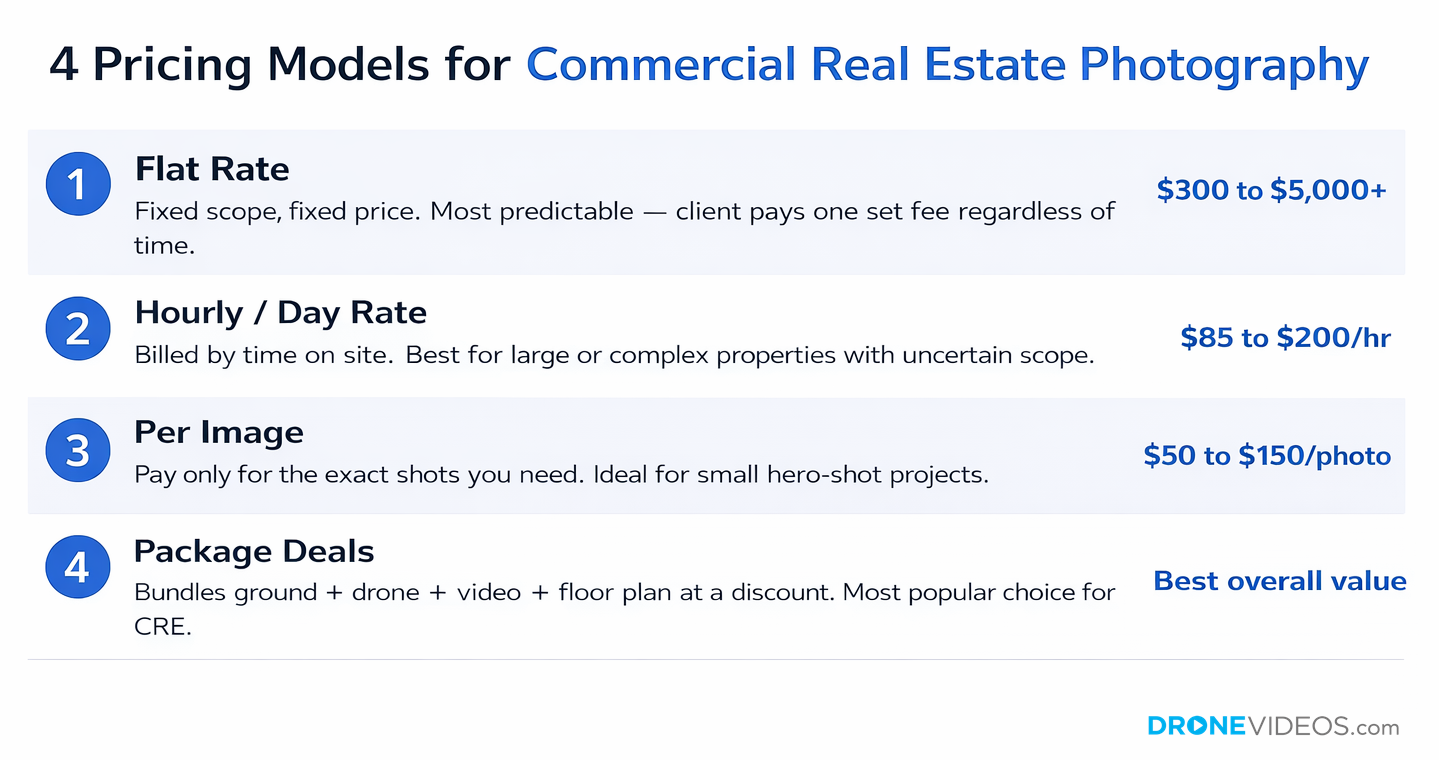
4 Pricing Models for Commercial Real Estate Photography:
1. Flat Rate Per Project
Flat-rate pricing sets a fixed fee for a defined scope of work, typically specifying the number of photos delivered, the spaces covered, and the licensing terms. This is the most common model for commercial real estate photography because it gives clients predictable costs and encourages photographers to plan and execute efficiently. Flat-rate projects typically range from $300 for basic single-building shoots to $5,000 or more for comprehensive campus productions. The risk is scope creep: if the shoot requires more time than anticipated because spaces were not prepared or additional areas were added on the day of the shoot, photographers may charge additional fees.
2. Hourly and Day Rates
Day-rate pricing bills by the time spent on site rather than by deliverable. Commercial real estate photographers typically charge $85 to $200 per hour, with half-day rates ranging from $400 to $800 and full-day rates from $800 to $2,000 or more for experienced specialists. This model works well for large, complex properties where the number of spaces and time needed on site is genuinely difficult to estimate in advance
3. Per-Image Pricing
Some photographers charge on a per-image basis, typically $50 to $150 per finished, edited photograph for commercial work. This model works well when a client needs a small number of high-impact shots, such as five hero exterior images for a marketing brochure, and does not require comprehensive interior coverage.
4. Package-Based Pricing
Package pricing bundles multiple services into tiered offerings at a single price point. For commercial real estate, packages commonly combine ground photography, aerial drone images, a floor plan, and a short marketing video at a discount compared to purchasing each service separately. Packages simplify the vendor selection process and often represent the best value for properties that require multiple deliverable types.
Commercial Real Estate Photography Cost by Property Type
Property type is one of the most reliable predictors of photography cost because it determines how many spaces need to be captured, how complex the lighting will be, how long the shoot will take, and what the final deliverable set must include. A small retail strip center and a 500,000-square-foot industrial park both fall under commercial real estate, but their photography requirements are worlds apart.
Commercial Real Estate Photography Cost by Property Type:
Office Buildings
Office building photography costs between $500 and $3,000 per shoot, depending on the number of floors, the variety of tenant suites and common areas, and whether the building has amenity spaces like lobbies, conference rooms, fitness centers, or rooftop terraces. Multi-story Class A towers with abundant amenities and complex lighting often require a full day on site, pushing costs toward the top of the range.
Retail and Restaurant Spaces
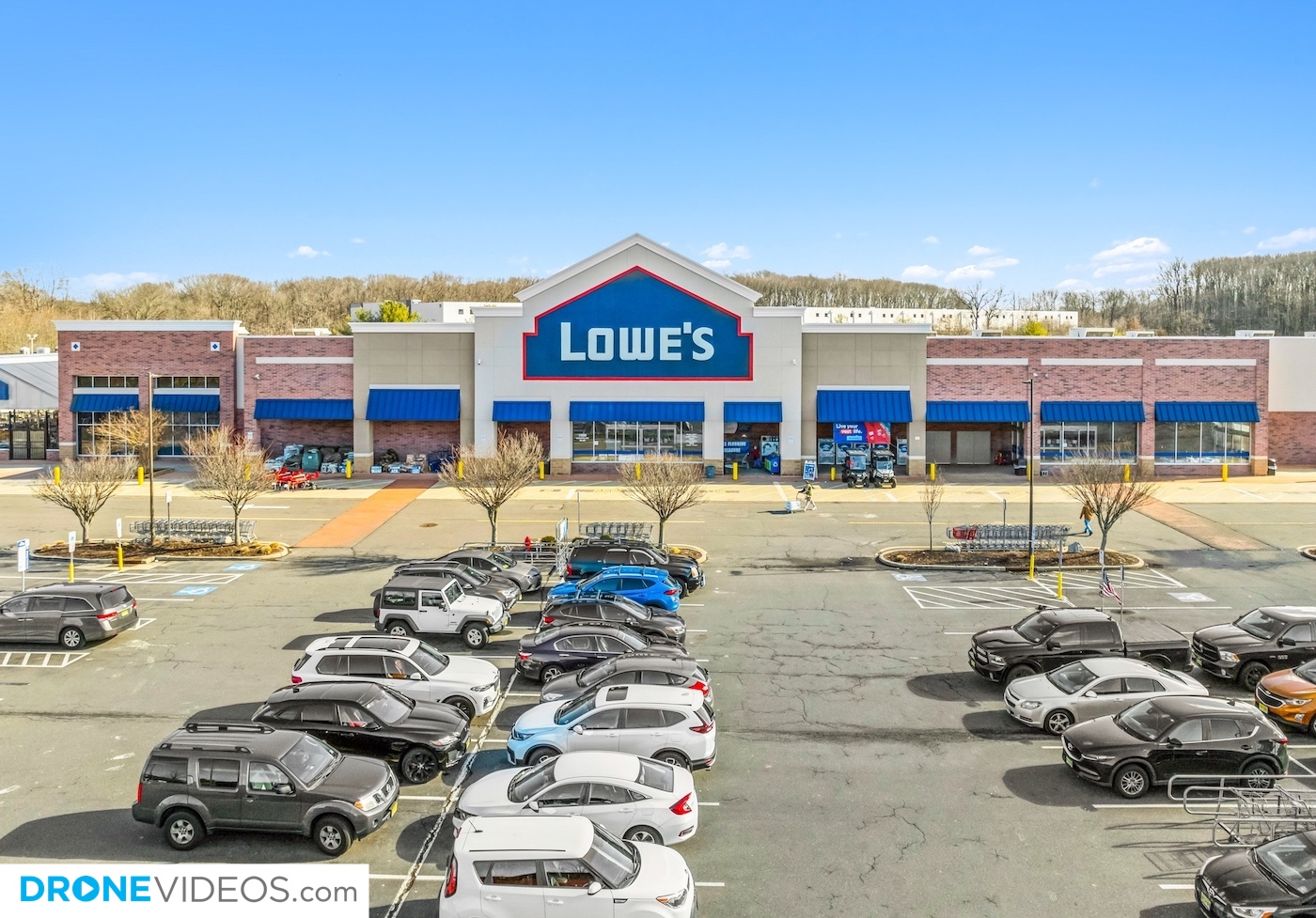
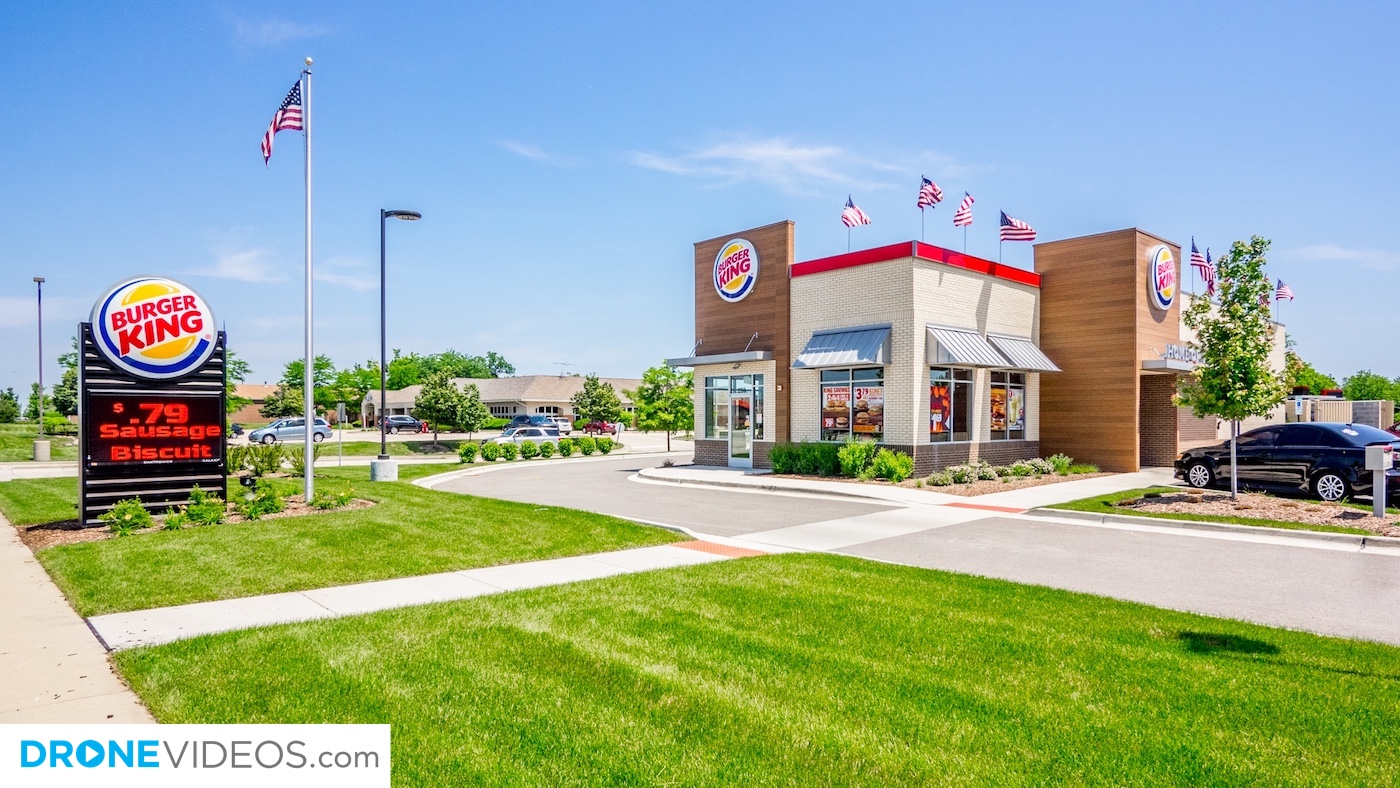
Retail photography costs between $300 and $1,500. A small single-tenant storefront with straightforward exterior shots and a few interior images sits near the lower end of this range. Larger retail centers, shopping plazas, and anchor-tenant buildings require more time, a wider variety of shots, and often incorporate aerial drone imagery to convey the site’s visibility, parking capacity, and access from major roads.
Industrial and Warehouse Properties
Industrial photography costs between $300 and $1,200. Warehouse and distribution facilities present unique challenges: vast interior volumes that require specialized lighting or natural light timing, large exterior lots and loading areas, and the need to convey clear-span height, dock configuration, and column spacing in a way that resonates with logistics-focused tenants.
Multifamily and Apartment Communities
Multifamily photography costs between $500 and $2,500. Apartment community marketing requires a comprehensive shot list that covers model units in each bedroom configuration, amenity spaces such as pools, fitness centers, clubhouses, and coworking lounges, exterior building elevations, and drone aerials showing the community’s relationship to surrounding neighborhoods.
Hospitality and Hotels
Hotel photography costs between $1,000 and $5,000 per shoot. A thorough hotel shoot captures room types, suites, lobby and public areas, food and beverage outlets, meeting and event space, pool and recreational facilities, and exterior elevations at multiple times of day. Luxury resorts regularly invest $5,000 to $15,000 in full-scale photography and video production.
Mixed-Use Developments
Mixed-use development photography costs between $1,500 and $6,000. These projects combine multiple asset classes in a single shoot, including ground-floor retail, upper-floor office or residential, parking structures, and activated public spaces. Aerial drone imagery is almost always essential for mixed-use projects, where the relationship between uses and the surrounding urban fabric is a primary selling point for tenants and investors alike.
What Factors Affect Commercial Real Estate Photography Costs?
Several variables beyond property type and package tier influence the final cost of commercial real estate photography. Understanding these factors helps property owners and brokers evaluate quotes accurately and anticipate costs before requesting proposals.
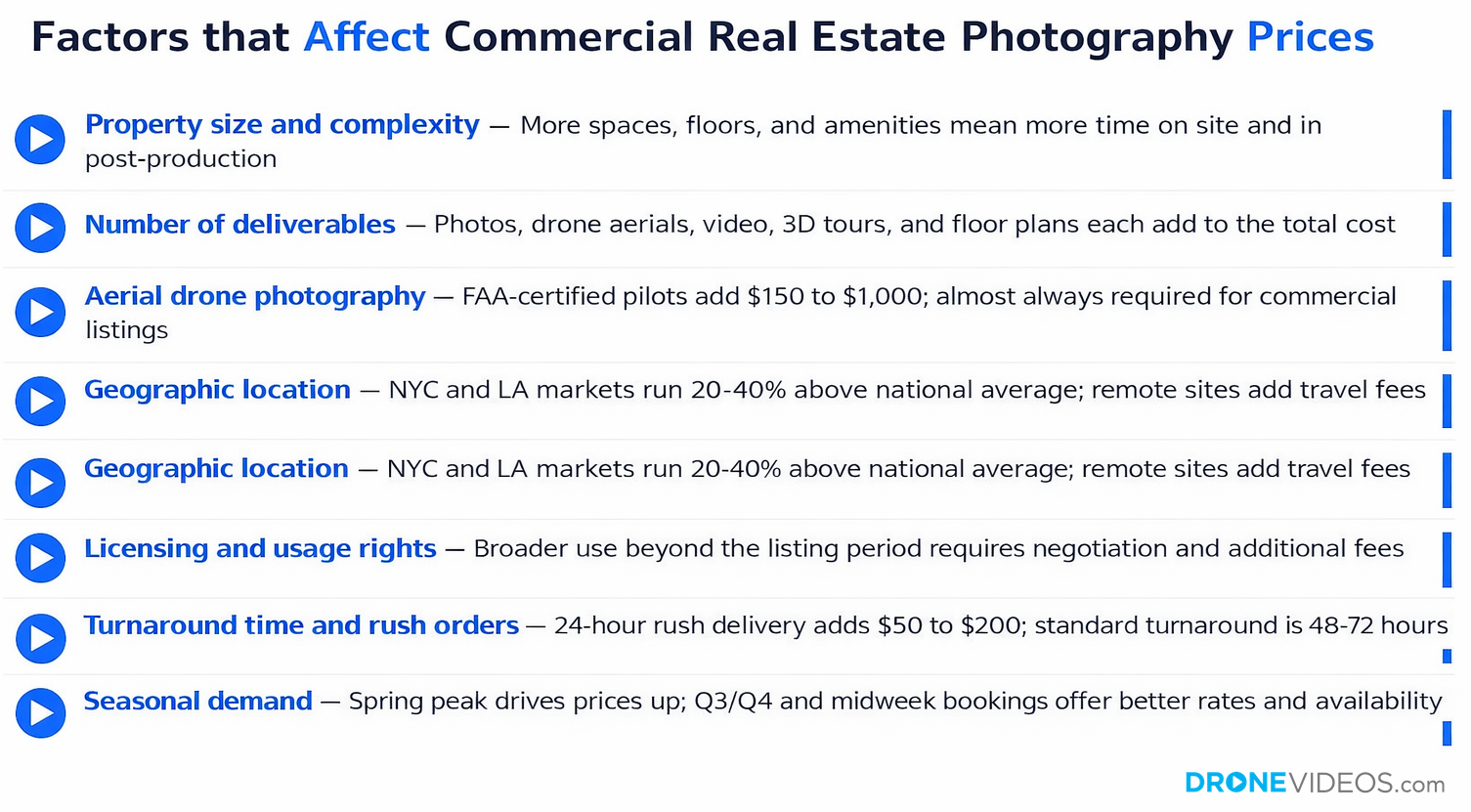
Factors that Affect Commercial Real Estate Photography Cost:
Property Size and Complexity
Larger properties require more time on site, more setups, and more post-processing. A single-tenant retail space may need two to three hours and deliver 15 to 20 images, while a large multi-tenant office building with a grand lobby, multiple floor plans, conference suites, and rooftop amenities may require a full day and deliver 40 to 60 images. Architectural complexity, particularly in buildings with reflective glass facades, irregular geometry, or dramatic interior volumes, adds time and skill requirements that push costs higher.
Number of Images and Video Deliverables
The volume of content directly drives cost. Most photographers include a set number of edited images in their base rate, with additional images charged per photo or through a higher-tier package. Adding a cinematic walkthrough video increases cost by $300 to $2,000 depending on video length and production quality. For a full comparison of video costs, see the real estate videography pricing guide.
Aerial Drone Photography
Aerial drone imagery for commercial real estate costs between $150 and $1,000 as a standalone service, or is frequently bundled into packages at a discounted rate. For commercial properties, drone photography is rarely optional: exterior shots from the ground fail to communicate site scale, parking capacity, road access, and signage visibility in the way that aerial perspective delivers. For more detail on aerial pricing, see the drone real estate photography cost guide.
Photographer Experience and Specialization
Entry-level commercial photographers may charge $200 to $400 for a standard shoot, while established specialists with deep CRE portfolios charge $800 to $2,000 or more for comparable scopes. For high-value assets like Class A office towers, luxury retail, or institutional multifamily communities, investing in an experienced specialist typically pays for itself through higher-quality deliverables that accelerate the leasing or sales process.
Geographic Location and Travel
Photography costs in major metropolitan markets run 20% to 40% higher than national averages. High-cost markets include New York City, San Francisco, Los Angeles, Boston, Seattle, and Miami. Properties in suburban markets are generally priced closer to national norms, while rural or remote locations may incur travel fees of $50 to $500 or more.
Turnaround Time and Rush Fees
Standard turnaround for commercial real estate photography is 24 to 48 hours for initial proofs and 48 to 72 hours for final edited deliverables. Rush delivery of 24 hours commands an additional $50 to $200. Scheduling with adequate lead time eliminates these costs entirely.
Seasonal Demand
Photography pricing follows the broader real estate market cycle. Spring and early summer are peak seasons when demand is highest and photographer availability tightens. Booking during Q3 or Q4 often results in more competitive pricing and greater scheduling flexibility.
Commercial Real Estate Photography Add-On Services and Costs
Standard photography packages capture the essential interior and exterior stills required for a listing. Add-on services expand the marketing impact of the shoot and are commonly recommended for properties above a certain value threshold or complexity level. Each add-on is most cost-effective when bundled with the primary shoot on the same day.
Commercial real estate photography add-on services and costs:
- Aerial Drone Photos (8 to 15 images): $150 to $600. Best for all commercial property types.
- Cinematic Walkthrough Video (60 to 120 sec.): $300 to $2,000. Best for office, multifamily, and hospitality.
- Twilight / Dusk Photography: $200 to $850. Best for high-design buildings and luxury retail.
- 3D Virtual Tour (Matterport or equivalent): $200 to $1,500+. Best for office, multifamily, and hospitality.
- 2D Floor Plan (LIDAR measured): $100 to $400. Best for office, industrial, and retail.
- Virtual Staging (per image): $50 to $150. Best for vacant office, retail, or multifamily units.
- Full Leasing or Marketing Video (2 to 4 min.): $1,000 to $5,000. Best for flagship office, mixed-use, and large multifamily.
- Rush Delivery (24-hour turnaround): $50 to $200. Available for any property type on urgent listings.
Aerial Drone Photography for Commercial Real Estate
Aerial drone photography is effectively mandatory for most commercial real estate marketing today. From a prospective tenant’s perspective, drone imagery communicates things that no ground-based photograph can: site boundaries, parking count, building orientation, loading dock access, proximity to highways and retail corridors, and the overall quality of the surrounding area.
3D Virtual Tours for Commercial Properties
3D virtual tours allow prospective tenants and buyers to explore a commercial property remotely with full spatial awareness. For office leasing, 3D tours are particularly effective because they allow occupiers to assess how a floor plate functions, how natural light flows through the space, and how individual suites relate to common areas, all without requiring an in-person site visit. Listings with 3D tours generate up to 50% more qualified leads than those with photos alone. For commercial properties, 3D tour pricing starts around $200 for smaller spaces and scales to $1,500 or more for large multi-floor properties.
Twilight and Dusk Photography
Twilight photography captures commercial properties during the brief window after sunset when natural and artificial light achieve a dramatic, balanced mix. For buildings with distinctive architecture, illuminated signage, or impressive ground-level lighting, a twilight session produces hero images that stand out on listing portals and in marketing materials. Twilight photography for commercial properties typically costs $200 to $850 for a dedicated dusk session. When booked in combination with a daytime shoot, many photographers offer twilight sessions at a reduced add-on rate.
Commercial vs. Residential Real Estate Photography: How Costs Compare
Commercial and residential real estate photography are often offered by the same photographers, but the scopes, pricing structures, and deliverable expectations are meaningfully different. For a full breakdown of residential pricing, see the real estate photography cost guide.
Commercial vs. residential real estate photography:
| Commercial Real Estate Photography | Residential Real Estate Photography | |
| Typical base cost | $300 to $1,500+ | $150 to $500 |
| Average shot count | 25 to 60+ images | 20 to 40 images |
| Shoot duration | Half day to full day | 1 to 3 hours |
| Aerial drone photography | Almost always required | Common add-on |
| Licensing scope | Broader, longer-term | Listing period only |
| Floor plans | Standard for office and industrial | Occasional add-on |
| Who typically pays | Broker or owner | Listing agent |
The key distinction is that commercial photography licenses images for a broader range of ongoing marketing uses, whereas residential photography is typically licensed for a single listing period ending at sale. Commercial images support leasing campaigns that may run for months or years, investor decks, annual report materials, and tenant branding efforts, all of which require a more expansive and carefully defined licensing agreement.
How to Prepare a Commercial Property for a Photography Shoot
The quality of commercial real estate photography depends as much on preparation as it does on the photographer’s skill. Well-prepared properties produce cleaner, more professional images with less post-production correction needed, which means faster delivery and fewer reshoots.
Exterior Preparation
- Clear the parking lot of vehicles in primary shooting areas
- Arrange for dumpsters, construction equipment, or service vehicles to be relocated on the day of the shoot
- Ensure all signage is clean, illuminated for twilight shoots, and properly mounted
- Have landscaping trimmed, walkways swept, and visible litter removed
- Confirm building facade lighting is functional if a dusk or night session is planned
Interior Preparation
- Declutter all visible spaces: remove personal items, confidential documents, and branded materials from view
- Turn on all interior lights and replace burned-out bulbs in every space to be photographed
- Clean glass surfaces, windows, and mirrors to reduce reflections
- Stage common areas, lobbies, and amenity spaces to reflect how they will appear to prospective tenants
- Coordinate with tenants in occupied buildings to vacate their spaces during the shoot window
Logistics and Access
- Confirm access arrangements with the building manager in advance, including elevator keys, suite codes, and roof access
- Identify an on-site contact who can assist the photographer and resolve access issues quickly
- Share the shot list with the photographer at least 48 hours before the shoot
- Verify whether drone permits are required near airports or in controlled urban airspace
- Have a contingency date available for weather-sensitive exterior and aerial shoots
How to Choose a Commercial Real Estate Photographer
Selecting the right commercial real estate photographer goes beyond comparing rates. The best commercial photographers combine technical skill with a deep understanding of how images are used in leasing and sales campaigns, and they have the professional infrastructure, including FAA certification for drone work, insurance, and reliable turnaround times, to support the pace of commercial real estate transactions.
1. Review Their Commercial Portfolio Specifically
Photographers who primarily shoot residential homes may not have the lighting skills, equipment, or experience with commercial property types required for office, industrial, or hospitality projects. Request examples from their portfolio that match the property type you need photographed.
2. Verify FAA Certification for Drone Work
Any drone photography on a commercial real estate shoot must be conducted by an FAA Part 107 certified remote pilot. Non-certified operators cannot legally fly drones commercially, and images captured in violation of FAA regulations may expose the property owner and broker to liability. Always confirm Part 107 certification and that the drone operator carries liability insurance before booking aerial services.
3. Understand the Licensing Agreement
Before signing any agreement, confirm exactly what uses are covered by the licensing included in the base rate. Ensure the license covers all anticipated uses: listing portals, the broker website, printed marketing materials, investor decks, and social media. Discuss extended licensing upfront to avoid unexpected fees later.
4. Ask About Turnaround Time and Communication
Confirm delivery timelines in writing before the shoot. Standard turnaround of 24 to 48 hours for proofs and 48 to 72 hours for final deliverables is reasonable for most projects. Ask how the photographer handles weather delays, access issues, or scope changes on the day of the shoot.
5. Compare Packages and Bundling Options
For properties that require multiple services, bundling ground photography, drone aerials, and a marketing video in a single package is almost always more economical than purchasing each service separately.
Tips to Reduce Commercial Real Estate Photography Costs
Commercial photography is an investment, but there are several straightforward strategies to keep costs in line without compromising the quality of the final deliverable.
- Book Multiple Properties Together: Scheduling multiple shoots in a single session almost always yields a multi-property discount of 15% to 30% when efficient routing or back-to-back scheduling is possible.
- Bundle Services on a Single Shoot Day: Ordering drone aerials, a floor plan, and a twilight session alongside ground photography on the same day is significantly more cost-effective than scheduling each service separately.
- Schedule During Off-Peak Periods: Midweek appointments and off-peak seasons, particularly late Q3 and Q4, tend to offer greater availability and more competitive rates than spring weekend slots in high-demand markets.
- Prepare the Property Thoroughly Before the Shoot: Every hour a photographer spends waiting for spaces to be cleared or lights to be turned on reduces the number of spaces that can be covered within a flat-rate session.
- Be Specific About Deliverables Upfront: Scope creep such as adding spaces, images, or video clips on the day of the shoot is one of the most common sources of unexpected cost in commercial real estate photography. Define exactly what you need in writing before the shoot.
- Use Virtual Twilight for Budget-Conscious Listings: Virtual twilight editing transforms a daytime exterior shot into a golden-hour image at $50 to $150 per image, compared to $200 to $850 for a live dusk session.
Frequently Asked Questions About Commercial Real Estate Photography Costs
Who pays for commercial real estate photography?
In most commercial real estate transactions, the cost of photography is paid by the listing broker, the property owner, or the developer, depending on the nature of the assignment. For listing assignments, brokers commonly absorb the photography cost as part of their marketing commitment. For ownership-side marketing such as investor presentations or construction documentation, the owner typically funds the photography as a project marketing expense.
Is commercial real estate photography worth the investment?
Professional commercial real estate photography consistently demonstrates a positive return on investment. Properties marketed with high-quality professional imagery lease and sell faster, attract more qualified inquiries, and support stronger price or rent negotiations. Aerial drone imagery alone is associated with listings selling up to 68% faster according to MLS data. For a broader perspective on how photography drives sales outcomes, see the real estate photography overview.
How long does a commercial real estate photography shoot take?
Shoot duration depends on property size and the scope of services. A small single-tenant retail property or simple warehouse can typically be completed in one to two hours. A mid-size office building with multiple tenant suites, amenity spaces, and exterior shots requires a half-day. Large multi-story office buildings, hotel properties, and apartment communities with extensive amenities typically require a full day. Shoots that incorporate aerial drone operations, twilight sessions, and video production may span two days.
Do I own the photos after the shoot?
In most commercial real estate photography agreements, the photographer retains copyright ownership of the images and grants the client a license to use them for specified purposes. You are purchasing usage rights, not the images themselves. Standard commercial real estate licenses typically cover marketing on listing portals, broker websites, printed brochures, and investor presentations for the duration of the listing. Uses beyond that scope require additional licensing negotiated in advance.
How many photos do I need for a commercial real estate listing?
A small retail or single-tenant industrial property benefits from 10 to 20 images covering key exterior angles and representative interior spaces. A mid-size office building typically requires 25 to 40 images to cover lobby, common areas, suite types, and amenities. Large Class A office buildings, hotel properties, and multifamily communities may require 50 or more images. For all property types, quality is more important than quantity: 20 exceptional images will outperform 50 mediocre ones in attracting qualified tenants or buyers.
What is the difference between standard and HDR commercial real estate photography?
Standard photography uses a single exposure per composition, relying on the camera’s ability to balance interior and exterior light. HDR (High Dynamic Range) photography takes multiple exposures and blends them in post-processing, producing images with balanced highlights and shadows that accurately represent how the space looks to the human eye. For commercial interiors with large windows and dramatic natural light variations, HDR photography produces noticeably cleaner and more professional results. For more on camera techniques used in professional shoots, see the camera settings for real estate photography guide.
What is a usage license in commercial real estate photography?
A usage license defines exactly how, where, and for how long you can use the images your photographer delivers. A standard commercial listing license typically covers broker portals, the property website, printed brochures, and investor materials during the listing period. If you plan to use the images in national advertising, publish them in trade media, or share them with third parties such as architects or tenants who will use them independently, you need to negotiate those rights in advance and budget for the additional licensing fee.